What New Jersey's 2025 Data Privacy Laws Mean for Small Businesses
You walk in on a Monday morning, coffee still warm, and your inbox is already exploding. One employee can't log in. Another says their personal information is showing up where it shouldn't. Suddenly that to-do list turns into one big question: What went wrong?
For too many small businesses, this is how a data breach becomes real--fast. It's a legal, financial, and reputational mess. IBM's 2025 report puts the average global cost of a breach at around $4.4 million, and Sophos found that most small-business cyberattacks involve stolen data or credentials.
In 2025, knowing the rules around data protection isn't optional - it's a survival skill.
Why Data Regulations Matter More Than Ever (Especially in New Jersey)
Small businesses are firmly on hackers' radar. They're easier to target than a Fortune 500 giant and often lack the same defenses. The damage can cut deeper in a close-knit business community like Central NJ, where reputation matters and word travels fast.
Regulators have noticed too. Across the U.S., a growing web of state privacy laws is reshaping how companies handle personal data. New Jersey's 2025 privacy law adds new requirements for how businesses collect, store, and share customer information. Meanwhile, Europe's GDPR continues to apply to any business that processes data from EU residents - even if that business is a 10-person firm in Freehold with a handful of international clients.
The consequences of noncompliance aren't just financial. A breach or violation can:
- Shake client or donor confidence for years
- Stall operations when systems go offline for recovery
- Invite legal action from affected individuals
- Damage search results and local reputation long after systems are restored
So yes, compliance helps avoid penalties--but more importantly, it protects the trust you've worked hard to build across Monmouth, Ocean, and Middlesex Counties.
The Regulations Central NJ Small Businesses Should Know
If your business serves clients across states or even countries, more than one set of rules might apply. Here are the key ones most small businesses ask us about at BluePrint HelpDesk.
General Data Protection Regulation (GDPR)
Applies to any business that handles personal data from EU residents. GDPR requires explicit consent, strict data security, limited retention, and gives individuals the right to access, correct, or delete their information.
California Consumer Privacy Act (CCPA)
Gives California residents the right to know what information is collected, to have it deleted, and to opt out of its sale. Businesses with broad customer bases or data footprints can easily fall under its reach.
New Jersey's 2025 Privacy Law
New Jersey's new state privacy law covers nearly all businesses, no matter their size or revenue. It defines how you must handle personal data, requires easy-to-understand privacy notices, and grants consumers rights to access, delete, or correct their information. If your company operates anywhere in the state - or markets to New Jersey residents - you're affected.
Local Reality Check:
In our saturated MSP market here in Central NJ, attackers assume small firms are underprotected. Weak passwords, unpatched software, and neglected backups are open invitations. A single compromised credential from a 10-person firm in Freehold can create a chain reaction across vendors, clients, and cloud systems in hours. The right policies - and tools - prevent that story from being yours.
Compliance Best Practices for Small Businesses in Central NJ
Here's where the regulations meet the day-to-day. Following these steps keeps your business compliant, secure, and ready for whatever Monday throws at you.
1. Map Your Data
Take inventory of every kind of personal information you collect--clients, donors, employees, vendors--and note where it's stored and who can access it. Don't forget old backups or employee laptops. For legal and financial firms, track client records; for nonprofits, donor information; for manufacturers, vendor and IoT data.
2. Limit What You Keep
If you don't need it, don't collect it. If you do, keep it only as long as necessary. Apply the principle of least privilege - only those who need access should have it. We often help local teams enforce this through Microsoft 365 permissions and Azure AD conditional access.
3. Build a Real Data Protection Policy
Put your rules in writing. Define how data is stored, backed up, encrypted, and securely destroyed when no longer needed. Include clear steps for breach response and device management. Many Central NJ businesses pair this with Azure Virtual Desktop to standardize security for hybrid teams.
4. Train - and Keep Training
Most breaches start with a human error. Teach your staff to spot phishing attempts, use secure file-sharing tools, and create strong passwords. Refresh the training regularly so it sticks. Our clients love short, scenario-based sessions that make security second nature.
5. Encrypt in Transit and at Rest
Use SSL/TLS for websites, VPNs for remote access, and encryption for all portable devices. Verify that your cloud providers - especially for Microsoft 365 and Azure - have end-to-end encryption turned on.
6. Don't Ignore Physical Security
Lock server rooms. Secure backup drives. Encrypt anything that could leave the building. This is especially critical for manufacturers in shared facilities and nonprofits using volunteer workstations.
7. Use AI & Automation Wisely
AI can make compliance simpler when used strategically. We deploy automation for log reviews, access checks, and alerting so small teams don't miss red flags. Even Microsoft 365's built-in AI can nudge users toward compliant behavior automatically.
Breach Response Essentials for Small Teams
Even with strong defenses, things can still go wrong. When they do, act fast:
- Bring your team together - legal, IT security, forensic, and communications.
- Isolate the affected systems and disable stolen credentials.
- Document what happened and what data was impacted.
- Notify affected individuals and regulators promptly (New Jersey now has clear deadlines).
- Patch weak points and update your training.
At BluePrint HelpDesk, our incident response process focuses on fast containment, transparent communication, and compliance-ready documentation designed for small Central NJ teams.
How BluePrint HelpDesk Helps Central NJ Businesses Stay Compliant
Compliance isn't just a checklist--it's a daily habit supported by the right tools. At BluePrint HelpDesk, we design IT environments for small organizations (5-35 employees) in professional services, nonprofits, and manufacturing that make compliance achievable.
Our solutions include:
- Cybersecurity & Compliance - policy creation, training, MFA, data loss prevention, and audit reporting
- Microsoft 365 & Cloud Migration - secure configuration, retention policies, and backup strategy
- Azure Virtual Desktop - secure, standardized workspaces for hybrid and multi-location teams
- AI & Automation - automated monitoring, access review, and compliance alerts
Based in Freehold, we support businesses across Monmouth, Ocean, and Middlesex Counties, and multi-location clients nationwide who want a trusted Central NJ partner.
Turn Compliance into Credibility
Data regulations will keep evolving, but that's not a reason to panic--it's an opportunity to prove that you take privacy and trust seriously. That's how small businesses win in competitive markets.
You don't need perfect security. No one has it. But you do need a culture that values data, clear policies, and regular checks to make sure reality matches your expectations. That's what builds credibility - and keeps it.
Schedule Your 15-Minute Discovery Call
Let's make this simple. Schedule a 15-minute discovery call with BluePrint HelpDesk and we'll:
- Map your top compliance and cybersecurity risks
- Prioritize quick wins for your team
- Outline a clear, actionable plan for your Central NJ business
Fill Out This Form to Receive Your FREE Guide Today!
Central New Jersey's Business Owner's Guide to IT Support Services & Fees
What you should expect to pay for IT Support for your business (and how to get exactly what you need without unnecessary extras, hidden fees and bloated contracts).
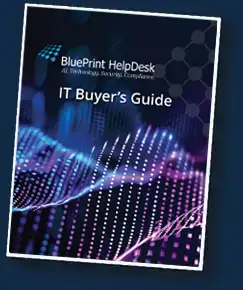
What you should expect to pay for IT Support for your business (and how to get exactly what you need without unnecessary extras, hidden fees and bloated contracts).